Last updated: November 5, 2026
OpenAI released GPT-6.1 Terra on October 26, 2026 as the mid-tier model in its GPT-6 family, built for computer use, visual reasoning and clearer writing. Through the API it costs $1 per million input tokens and $5 per million output tokens, which OpenAI says is 50% lower than GPT-5.6 Terra and GPT-6.1 Sol.
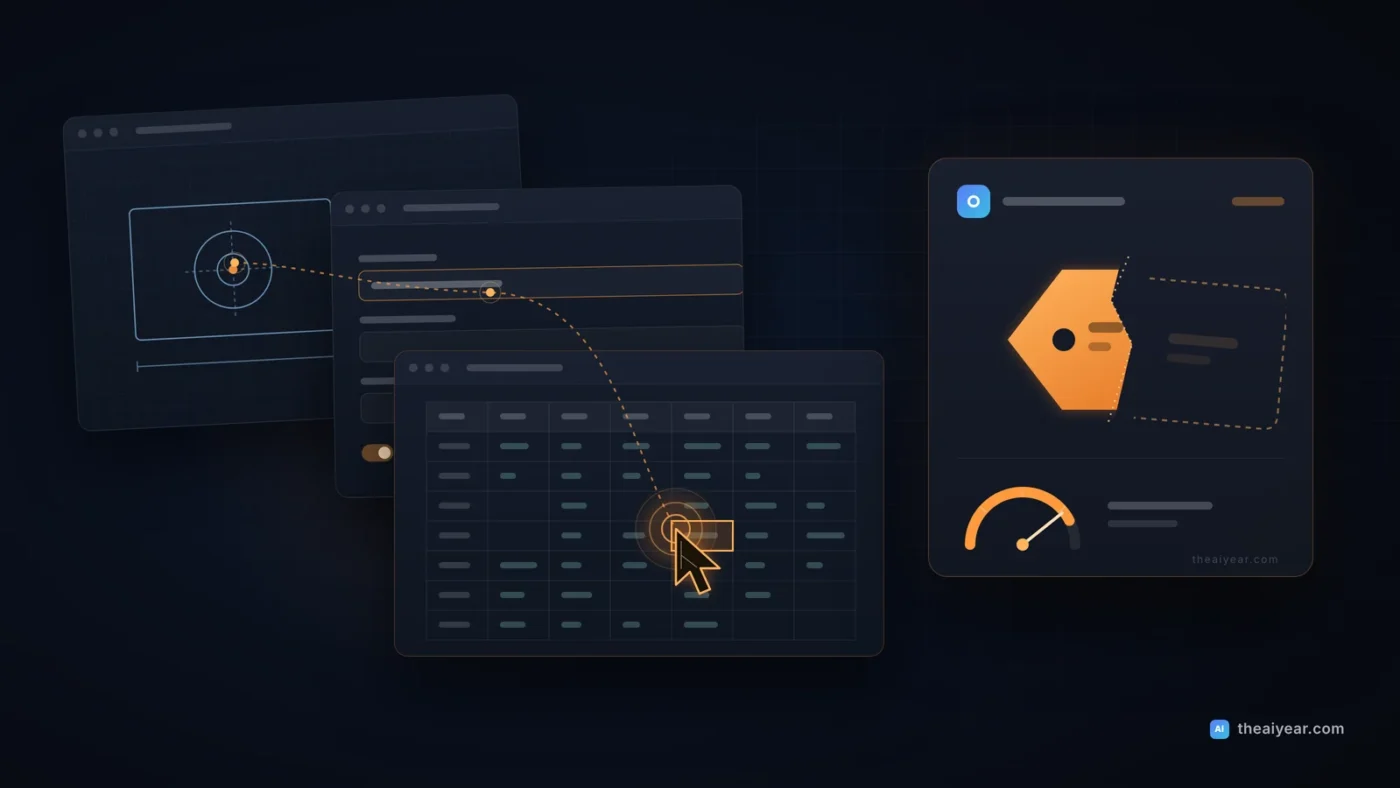
So the headline isn’t raw intelligence. It’s price, paired with better handling of the dull, screen-heavy work that eats a lot of the workday: reading documents and images, clicking through apps, filling out forms, and writing plain status updates.
The launch drew one of the biggest threads of the day on Hacker News, and Amazon and Microsoft put the model on their own clouds the same day. Here’s what’s actually new, which numbers come from OpenAI alone, and what to test before you switch.
What OpenAI released
GPT-6.1 Terra is the mid-tier model in the GPT-6 family. OpenAI’s pitch is a “fast, efficient model” that pairs visual reasoning and computer use with clearer writing. Its own examples are telling: reading incoming invoices and entering them into accounting software, interpreting technical drawings, and editing videos.
The API model page lists the details developers care about:
- Model ID
gpt-6.1-terra, with text and image input and text output (no audio or video). - A 1,050,000-token context window, with up to 922,000 input tokens and 128,000 output tokens.
- A June 1, 2026 knowledge cutoff.
- Reasoning effort settings from
noneup tomax, withmediumas the default. - Support in the Responses API, Chat Completions and Batch. Tool calling requires the Responses API.
The price is the real story
Standard pricing is $1 per million input tokens, $0.05 per million cached input tokens and $5 per million output tokens. Cache writes cost $1.25 per million for 30-minute retention. Batch and Flex are 50% cheaper again, and Fast mode costs twice the standard rate.
There’s one catch worth reading twice. Any prompt over 272,000 input tokens is billed at 2x input and cache rates and 1.5x output for the whole request. So the million-token window is real, but filling it isn’t cheap. If your app stuffs entire codebases or document dumps into every call, do the math before you assume the 50% cut applies to you.
For ChatGPT users, the change shows up as more room in your plan. OpenAI says the same usage allowance in ChatGPT Work and Codex covers more tasks with Terra than with GPT-5.6 Terra, and “substantially more” than with GPT-6.1 Sol or GPT-6 Astra.
What OpenAI claims it can do
Every benchmark number below is OpenAI’s own, from its launch post. No one has independently reproduced them yet.
- Computer use: on Agents’ Last Exam, a set of professional tasks like turning architectural drawings into a 3D model, Terra at medium effort scores 15 percentage points higher than GPT-5.6 Terra at about a third of the cost. OpenAI says it performs on par with GPT-6 Astra at a tenth of the price per token and finishes tasks more than three times faster than Astra and GPT-6.1 Sol.
- Coding: on Terminal-Bench 4.0 at max effort, Terra solves 50.3% of tasks, versus GPT-5.6 Terra’s published 21.5%. OpenAI itself says Sol and Astra “remain the better choice” for the most complex coding.
- Factual errors: on an internal set of error-inducing prompts, OpenAI says the error rate at low effort fell from 53.6% to 16.7%, and to 4.3% at max effort.
- Rivals: at max effort, OpenAI says Terra is over three times as token-efficient as Anthropic’s Claude Opus 5.5 and a quarter of its price per token, for roughly 9x lower cost per task on Agents’ Last Exam.
My take: the factuality claim is the one to watch, and also the one to trust least until outside testers weigh in. “Internal benchmark of error-inducing prompts” tells you almost nothing about how it’ll do on your data. We’ve written before about why models make things up, and a big drop on a vendor’s own test is a reason to check, not a reason to stop checking.
Safety: rated Critical for cybersecurity
One detail is easy to miss. In its system card addendum, OpenAI says it is treating Terra as Critical in cybersecurity and High for biological and chemical capability under its Preparedness Framework. So Terra gets the same safeguards as GPT-6.1 Sol and GPT-6 Astra.
That’s notable for a model sold as the cheap, high-volume option. Capabilities OpenAI considers top-risk in cyber are now available at a mid-tier price. For most teams this mostly means you may see the same refusals and security checks you’d see on the bigger models. For the industry it means the “small and cheap” tier isn’t so small anymore.
Where you can use it
OpenAI says Terra is available to Plus, Pro, Enterprise and Edu users in ChatGPT Work and Codex, and its release notes add Business plans. The same notes say the model isn’t available in regular Chat. You pick it from the model list under Advanced in the desktop app or in ChatGPT Work on the web.
Outside OpenAI, Terra went generally available on Amazon Bedrock and in Microsoft Foundry on launch day. That matters if your company’s AI spending has to run through an existing AWS or Azure contract. If you’re on ChatGPT Pro or Business, your plan may also include API credits you can spend testing Terra through the API.
What to do this week
If you run anything on GPT-5.6 Terra, this looks like an easy upgrade to test, since OpenAI is claiming better results for half the price. But “test” is the key word. A sensible plan:
- Run your own evals first. Take 50 to 100 real tasks from your logs and compare outputs side by side. Our guide to testing an AI feature before your users do walks through a simple setup.
- Check your prompt sizes. If many requests cross 272,000 input tokens, the long-context surcharge can wipe out much of the saving.
- Try lower reasoning effort. Most of OpenAI’s cost claims are at medium effort. Many routine jobs may not need
highormax. - Keep humans in the loop on computer use. Faster agents that click through real apps can also make mistakes faster. Start with read-only access and approval steps, as we laid out in designing safe AI agent workflows.
- Keep your hardest coding on Sol or Astra for now, as OpenAI itself recommends.
The bigger trend is clear: the price of “good enough” AI keeps falling while the quality floor keeps rising. If you’ve been holding off on automating a boring, screen-based workflow because the model costs didn’t add up, it’s worth running the numbers again. Just run them on your own tasks, not on a launch chart. Open-weight models are part of that math too, as our Gemini 4 Carbon vs Mistral Large 4 breakdown shows.