Last updated: November 1, 2026. By Kabeer Ahmed.
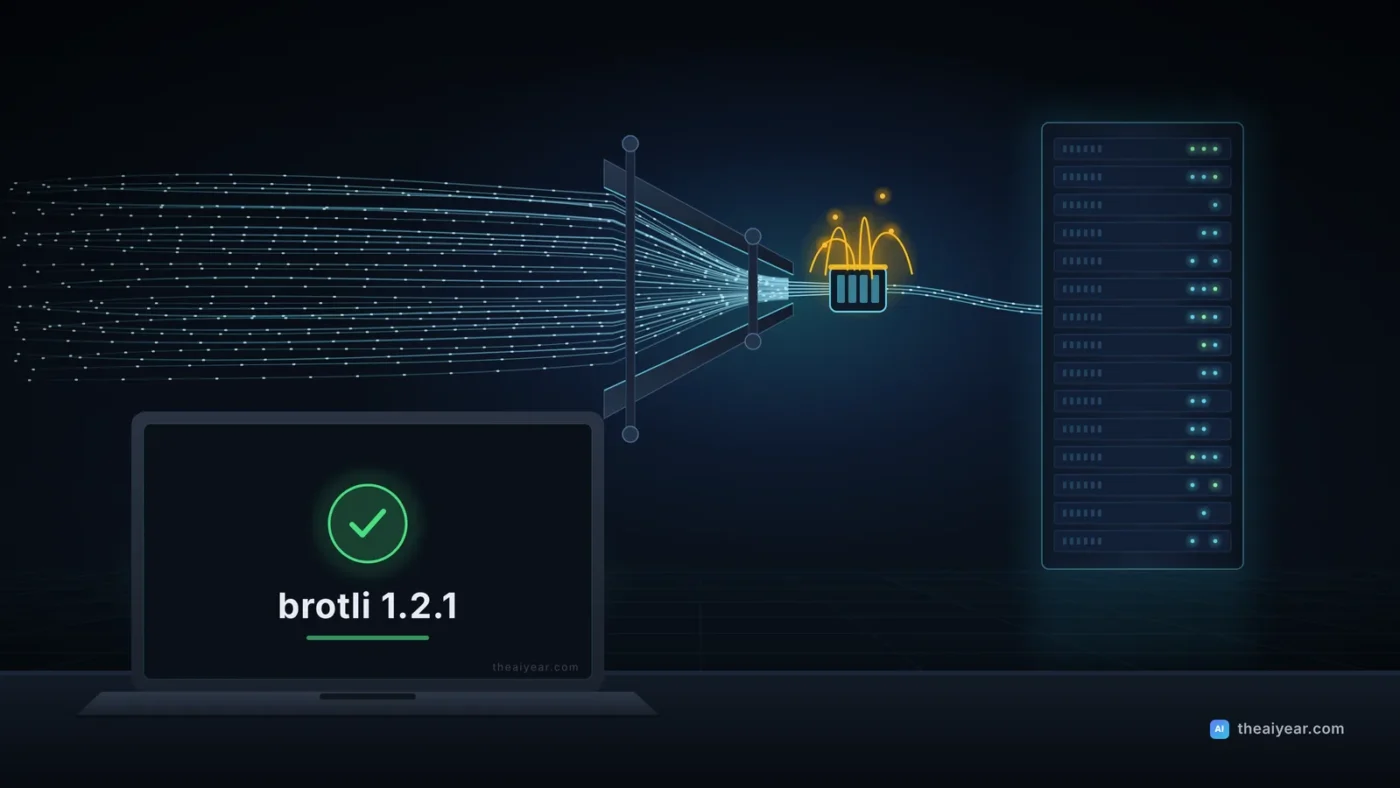
HTTP2Shell, also called Node2Shell, is CVE-2026-111497: a critical bug in the decoder of Brotli, Google’s open-source compression library. Crafted compressed data can crash an app, leak memory and potentially run code. It is one bug with several names. Fixes shipped on October 21, 2026, and CISA now lists it as exploited.
The short version
- Affected: Brotli 1.0.3 through 1.2.0, and anything that bundles it (OSV, GitHub Advisory).
- Fixed: Node.js 22.23.4, 24.22.1 and 26.12.1 (Node.js); PyPI brotli 1.2.1 and brotlicffi 1.2.1.0 (GitHub Advisory).
- Exploited: CISA added it to KEV on October 27, 2026 (CISA), with a November 10 federal deadline (SecurityWeek).
What happened
The CVE record says a flaw in the Brotli decoder lets a remote, unauthenticated attacker corrupt memory, leak sensitive memory, crash the process or potentially execute code using a crafted Brotli-compressed stream (OSV). Node.js’s advisory says an attacker who can supply Brotli data that an app decompresses with node:zlib can corrupt process memory, which can lead to a crash, memory disclosure or remote code execution, and credits OpenAI researchers with the report (Node.js). Envoy published its own advisory for deployments with the Brotli decompressor configured (Envoy).
The risk runs both ways: servers that accept compressed requests and clients (including HTTP clients inside apps and AI agents) that decompress responses from a malicious server.
Who is affected
- Node.js 22.x, 24.x and 26.x before the October 21 releases (Node.js). ELLIO says end-of-life lines 20.x, 23.x and 25.x are also affected and won’t get fixes (ELLIO).
- Python with brotli below 1.2.1 or brotlicffi below 1.2.1.0 (GitHub Advisory). Aikido notes that common HTTP clients can load these packages automatically when installed (Aikido).
- Envoy with the Brotli decompressor configured (Envoy), and Bun (fixed in 1.4.4, per Aikido).
- Appliances: Palo Alto Networks is rolling out PAN-OS hotfixes (SecurityWeek). Check every vendor that bundles Node.js or Brotli.
How to check
- Node.js: run
node -vin every environment, including containers and CI. ELLIO warns thatprocess.versions.brotlican report the same Brotli string on patched and vulnerable builds, so check the Node.js release version (ELLIO). - Python: run
pip show brotli brotlicffiand check your lockfiles. - Containers: check the base image tag. A pinned old tag keeps shipping the bug.
How to fix or mitigate
- Update Node.js to 22.23.4, 24.22.1, 26.12.1 or newer, or move off end-of-life lines (Node.js).
- Upgrade brotli to 1.2.1 and brotlicffi to 1.2.1.0 or later, then update lockfiles (GitHub Advisory).
- Update Envoy to a fixed release listed in its advisory (Envoy), Bun to 1.4.4 or later, and your OS packages.
- Rebuild and redeploy container images and restart processes. Upgrading a package without restarting leaves the old code running.
- If you can’t patch yet, Aikido suggests rejecting incoming requests with Brotli (
br) content encoding at the proxy and disabling Brotli decoding for outbound requests (Aikido). That buys time but doesn’t fix the bug. - Watch for unexplained crashes and restarts. ELLIO notes failed attempts can crash the process (ELLIO).
If you build AI agents that fetch web pages, their HTTP client is exactly what a malicious server could target. See designing safe AI agent workflows, and don’t paste logs or keys into public chatbots (how to avoid leaking data).
Timeline
- Oct 21, 2026: Brotli and Node.js ship fixes (Node.js).
- Oct 26-27, 2026: honeypots log exploitation attempts. ELLIO reports an in-the-wild attempt it describes as a defective “first-generation attempt”; Previdian reports one attempt on October 27 (ELLIO, SecurityWeek).
- Oct 27, 2026: CISA adds CVE-2026-111497 to KEV (CISA).
- Nov 10, 2026: federal agency deadline (SecurityWeek).
What we don’t know yet
CISA hasn’t said which attacks triggered the listing or whether any succeeded. Public reports so far describe honeypot attempts.
Related
The same week brought PHP2Shell, the AI-found PHP bug, with the same pattern: patch, proof of concept, attacks within days.
Sources
- OSV: CVE-2026-111497
- Node.js October 2026 security releases
- GitHub Advisory GHSA-9v8h-qqgm-4m35
- Envoy advisory GHSA-3wvj-j6qm-62mr
- CISA KEV addition, Oct 27, 2026
- SecurityWeek
- ELLIO research
- Aikido
This explainer reports public advisories and news coverage as of the date above. Check your vendors’ advisories for your setup.